

The Contact Center Deepfake Playbook: Voice Clones at Step-Up Authentication
Defend contact center step-up authentication against voice clones and deepfake video. Detection at the call boundary, escalation paths, and integration patterns.
Full name + work email required. We'll email you a copy.
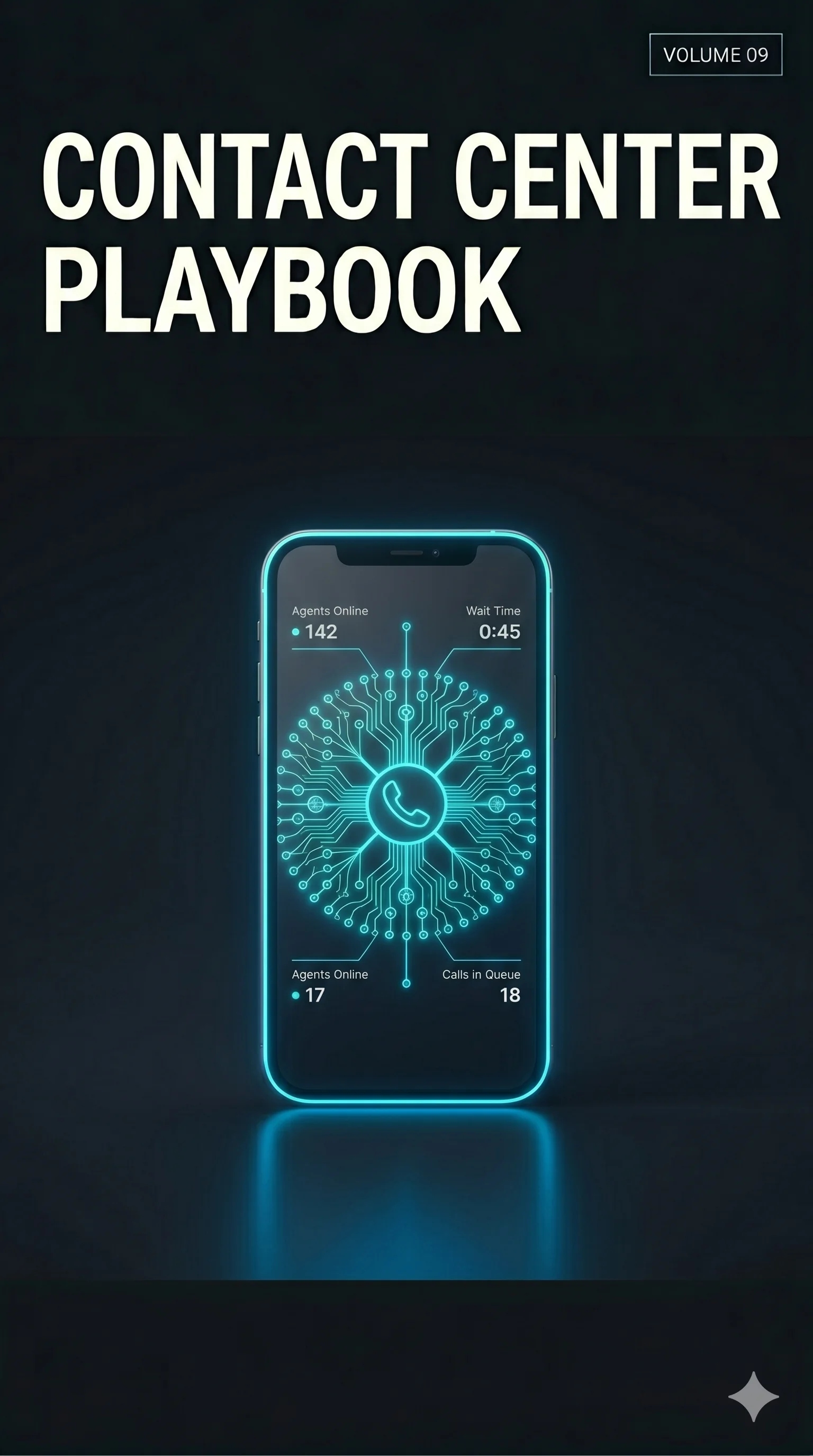
Contact centers are the single largest open attack surface in financial services in 2026. Voice clones from ElevenLabs and emerging synthesizers now pass speaker verification for most enrolled voiceprint systems. Five seconds of audio from a podcast is enough to clone a customer's voice. Real-time deepfake video bypasses liveness checks during video customer service callbacks.
The losses are accelerating. Most reported attempts target large outbound wires authorized through phone-based or video-based step-up authentication. This playbook walks through the controls that work.
1. The threat patterns
Voice clone for outbound wire authorization
A cloned voice impersonates the customer. The attacker calls customer service requesting an outbound wire to a beneficiary opened in the past 14 days. Voice-based step-up auth passes because the clone matches the enrolled voiceprint within tolerance.
Deepfake video at high-stakes service interactions
Banks and wealth managers increasingly use video-based service for high-stakes interactions (large transfers, account closures, beneficiary changes, address updates). Real-time deepfake video impersonates the customer in the video session. Liveness checks pass at the 2023 generation of detection.
Combined voice clone plus deepfake video on call-back
Some attacks chain both. The attacker initiates the request via cloned voice. The agent calls back the verified phone number, which has been SIM-swapped to the attacker. The attacker takes the callback on a deepfake-enabled video session.
2. The controls
Real-time voice clone detection. Detection runs on inbound audio in under 300ms. Spectral analysis, prosody fingerprinting, and generator attribution all fire before the call is connected to the agent. 96%+ accuracy on production traffic. Under 2% false-positive rate. Coverage across ElevenLabs, OpenAI TTS, Microsoft VALL-E, and emerging models.
Real-time deepfake video detection. Frame-level forensics plus motion analysis at sub-200ms decisions during the video session. Detection happens continuously, not just at session start.
Cross-channel verification. When voice or video detection fires, the system requires verification through a different channel. Voice clone detected → push notification step-up to enrolled mobile app. Deepfake video detected → outbound voice callback to a different verified phone number.
Configurable policy per service action. Higher-stakes actions require more verification. Outbound wire over $10K → voice clone detection + deepfake video detection + cross-channel + supervisor review.
3. Integration patterns by platform
Reference integrations exist for the major contact center platforms: Genesys Cloud (SIP middleware), NICE CXone (Real-Time Authentication framework), Five9 (Studio script), Twilio Flex (Voice Insights), Amazon Connect (Contact Lens), Zoom Video (Real-Time Media SDK), Microsoft Teams (Media Bot framework), and Google Meet (Add-on framework).
4. The escalation path
When detection fires the call follows a structured path: detection runs in IVR; if it fires, cross-channel step-up is required; the customer is enrolled mobile-push; if confirmed, service action is allowed with supervisor flag; if denied, the action is blocked. The escalation adapts to the configured policy per service action.
5. Operational metrics
Production deployments at mid-size and enterprise banks consistently report: voice clone fraud loss reduced 87% in the first year; detection time on attempted attack moves from 12-18 days post-event to real-time; false-positive rate impact on legitimate customers under 2%; integration onboards in 30 to 60 days.
6. The audit trail
Every detection event produces an immutable audit record including detection ID, encrypted reference to the audio that fired detection, confidence score with bounds, probable generator, counterfactual, action taken, and customer outcome. Audit records are exportable in FFIEC and OCC SR 11-7 formats.
Contact Center Deepfake Playbook FAQ
- Does deepfake detection slow down legitimate calls?
- Sub-300ms detection latency is unnoticeable in the IVR phase before agent connection. Customer-perceived call latency is unchanged.
- What about consent for recording?
- deepidv detection runs at the analysis layer and does not require new recording. The audio that contact centers already record for quality assurance is sufficient. Recording consent remains a customer responsibility based on jurisdiction.
- How does this integrate with existing voice biometric authentication?
- Voice clone detection runs alongside the existing voice biometric. The biometric verifies the speaker matches the enrolled voiceprint. The clone detection verifies the audio is not synthesized. Both must pass for high-stakes actions.
- What if my contact center platform is not on the integration list?
- Custom integrations available via the SIP middleware approach. Audio routes through the detection layer between the carrier and your platform.
- How does this work for outbound calls from the bank?
- Outbound deepfake detection on customer-side audio. The bank places the call. Detection runs on the customer's audio in real time. The agent sees the detection signal alongside other call context.
- What is the cost model?
- Per-call pricing with volume discounting. Most enterprise customers land at $0.005 to $0.015 per call depending on volume and integration depth.
Relevant Articles
The AI verification playbook
Seven surfaces every modern compliance team needs to cover.
Apr 29, 2026

The North Korean IT worker defense playbook
Detection across the hire pipeline.
Apr 29, 2026

Sample forensic report: AI-generated paystub
Five-layer detection on a paystub caught at mortgage origination.
Apr 29, 2026
What is deepidv?
Not everyone loves compliance — but we do. deepidv is the AI-native verification engine and agentic compliance suite built from scratch. No third-party APIs, no legacy stack. We verify users across 211+ countries in under 150 milliseconds, catch deepfakes that liveness checks miss, and let honest users through while keeping bad actors out.
Learn More