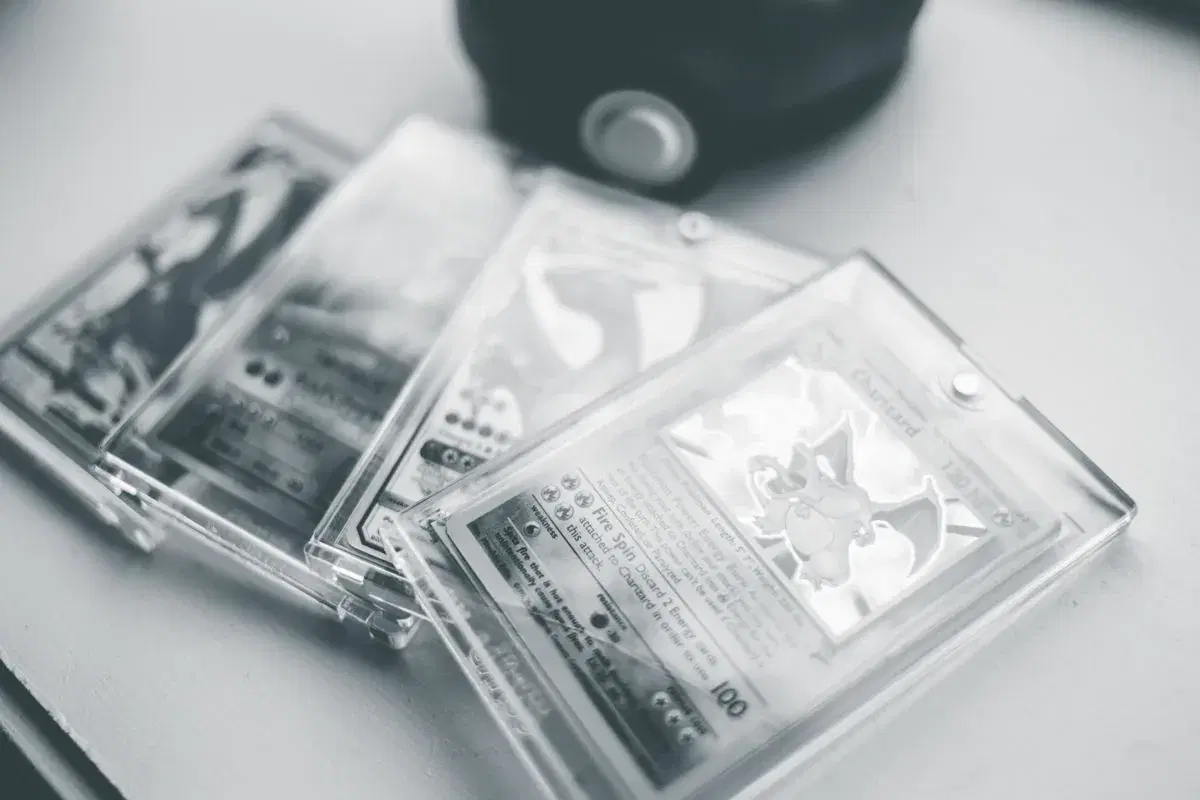
TCG Marketplace Fraud in 2026: The Seven Scams to Stop
Fake slabs, cloned cert numbers, resealed boxes, ban evasion. The seven trading card scams hitting marketplaces in 2026, with data from PSA, CNN and the DOJ.
Sep 28, 202611 min
Read more

Deepfakes have moved from novelty to weapon. Fraudsters now use AI-generated faces, documents, and videos to bypass identity checks at scale. Here is what has changed and what it means for your verification stack.
Not long ago, creating a convincing deepfake required specialized hardware, deep technical expertise, and hours of processing time. As of 2026, a teenager with a consumer laptop and a free app can generate a photorealistic face swap in under sixty seconds. This shift has fundamentally changed the identity fraud landscape, and defenders are now racing to keep pace.
Deepfake technology has matured across three critical dimensions simultaneously:
Quality. Modern generative adversarial networks (GANs) and diffusion models produce faces that are indistinguishable from real photographs to the human eye. Skin texture, lighting, hair detail, and micro-expressions are all rendered with photographic accuracy.
Speed. Real-time face swap applications now operate at 30+ frames per second with latency under 40 milliseconds. An attacker can conduct a live video verification call wearing someone else's face, and the person on the other end will not notice.
Accessibility. Open-source deepfake tools have proliferated. What once required a machine learning PhD now requires a YouTube tutorial and a few hours of experimentation.
Fraudsters have developed several attack patterns that exploit deepfake capabilities:
Rather than stealing a real person's identity, attackers generate entirely synthetic identities: faces that belong to no real person. These synthetic faces are combined with fabricated or stolen PII to create complete identity packages. Because the face is not real, there is no victim to raise an alert, and the synthetic identity can persist for months or years.
AI-generated faces are inserted into forged identity documents. The document template may be genuine (purchased on the dark web), but the photo is synthetic. Traditional document verification that checks template authenticity will pass these documents because the template is real. Only the photo is fake.
The most direct attack: a fraudster presents a deepfake face during biometric verification. Using real-time face swap software, the attacker's camera feed shows the target's face performing any requested action, whether blinking, turning, smiling, or reading numbers. Every challenge-response liveness check is defeated because the deepfake replicates the attacker's movements with the target's appearance.
Deepfakes are used to pass re-verification checks on existing accounts. When a platform requires a selfie to confirm account ownership, a deepfake of the legitimate account holder defeats the check.
The identity verification industry's traditional defenses were designed for a pre-deepfake world:
| Defense | Pre-Deepfake Effectiveness | Post-Deepfake Effectiveness |
|---|---|---|
| Photo comparison | 95%+ | <60% against quality deepfakes |
| Challenge-response liveness | 90%+ | <15% against real-time face swaps |
| Manual human review | 85%+ | <50% against high-quality deepfakes |
| Template-based document checks | 95%+ | Irrelevant (template is genuine) |
The core problem is architectural: these defenses test whether an image looks real, not whether it is real. Deepfakes look real by design.
Effective defense requires a fundamentally different approach, one that tests for signals deepfakes cannot replicate:
Instead of asking users to perform actions (which deepfakes can replicate), passive liveness analyzes the physical properties of the captured image:
The center of gravity has shifted: injection attacks, in which synthetic video is fed directly into the data pipeline while bypassing the camera entirely, now dominate the threat picture. Detecting injection requires:
AI-generated document photos leave statistical artifacts that differ from genuine camera captures:
deepidv's verification platform is built for the deepfake era:
Deepfake technology will continue to improve. Detection technology must improve faster. The providers that invest in continuous adversarial research, actively generating deepfakes to test and improve their own detection, will maintain their edge. Those that treat detection as a static capability will fall behind.
For businesses, the imperative is clear: audit your current verification stack against modern deepfake tools. If your provider still relies on challenge-response liveness or manual human review as primary defenses, you are exposed. The time to upgrade was yesterday.
Go live in minutes. No sandbox required, no hidden fees.
Fake slabs, cloned cert numbers, resealed boxes, ban evasion. The seven trading card scams hitting marketplaces in 2026, with data from PSA, CNN and the DOJ.
A guide to trading card fraud: counterfeit slabs, reslabbing, trimmed cards, non-delivery and triangulation scams, and how to authenticate a graded slab.
A practical peer-to-peer marketplace safety guide: spot overpayment, fake-payment, and off-platform scams, and how identity verification protects both sides.